
No road reaches Bhutan's most famous monastery. Instead, visitors earn the privilege with a steady climb through pine forests and mountain air to one of the world's most spectacular sacred sites.
Long before reaching Bhutan's Tiger's Nest Monastery, hikers understand why it has achieved almost mythical status. The monastery refuses to reveal itself all at once. Instead, it teases with fleeting glimpses through towering blue pines before finally emerging in full—a cluster of whitewashed buildings improbably anchored to a sheer granite cliff nearly 900 metres above the Paro Valley.
Known as Paro Taktsang, Tiger's Nest is Bhutan's spiritual icon and, for many visitors, the defining experience of a journey through the Himalayan kingdom. At an elevation of about 3,120 metres, it is not simply a place to visit but one that must be earned. There is no road, no cable car and no easy alternative. The only way to arrive is on foot, following a mountain trail that has carried monks and pilgrims for centuries.
The walk begins quietly enough at the forested trailhead north of Paro. Prayer flags ripple between the pines while the scent of resin hangs in the cool morning air. The path is broad and well maintained, but it wastes little time in gaining altitude, winding steadily uphill through the forest in a series of long switchbacks.
The climb is never especially steep, yet the combination of continuous ascent and thinning air soon makes itself known. Visitors accustomed to walking at sea level often discover their pace slowing naturally as each breath delivers a little less oxygen than expected. Fortunately, the trail encourages frequent pauses, whether to admire the scenery or simply to catch a breath.

Every so often, the monastery appears through a break in the trees, always seeming tantalisingly close. It is an illusion repeated throughout the ascent. Each glimpse suggests the destination is just around the next bend, only for the path to continue climbing into the forest.
About halfway, a mountainside café provides both welcome refreshment and one of Bhutan's classic views. Across the valley, Tiger's Nest appears almost suspended in mid-air, its temples cascading down the cliff face as though they have grown from the rock itself. It is a perspective that invites cameras, but also quiet contemplation. The achievement of the monastery's builders becomes increasingly difficult to comprehend.
Beyond the café, the trail narrows and climbs toward a viewpoint directly opposite the monastery before dropping unexpectedly into a rocky gorge. A waterfall tumbles beneath the complex, sending cool spray across a bridge that marks the final stage of the pilgrimage. From there, a long staircase climbs back toward the monastery entrance, providing one last test for legs already feeling the effects of altitude.
Crossing the threshold into Tiger's Nest is like entering another world. Butter lamps flicker inside dim chapels where the scent of incense lingers in the still air. Murals cover ancient walls and monks move quietly through corridors that have echoed with prayer for generations. Photography is forbidden inside, a reminder that despite its international fame, this remains an active place of worship.
According to Buddhist tradition, Guru Padmasambhava, revered as Guru Rinpoche, flew to this cliff on the back of a tigress in the eighth century to meditate in a cave that still forms the monastery's spiritual heart. The buildings surrounding it were constructed in the late seventeenth century, creating one of the world's most extraordinary religious complexes.
The return walk offers a chance to appreciate how far the climb has come. Looking back across the valley, the monastery seems even more improbable than before, its white walls almost disappearing into the vast cliff that supports them.
For most travellers, the hike is comfortably achievable with reasonable fitness, allowing four to six hours for the round trip. Good walking shoes, plenty of water and a measured pace are far more valuable than speed, while spending a day or two acclimatising in Paro beforehand makes the climb considerably more enjoyable.
Tiger's Nest is often described as Bhutan's must-see attraction, but that undersells the experience. It is the walk, as much as the monastery itself, that leaves the lasting impression—a journey through forest, mountain and faith that transforms an iconic photograph into something deeply personal.
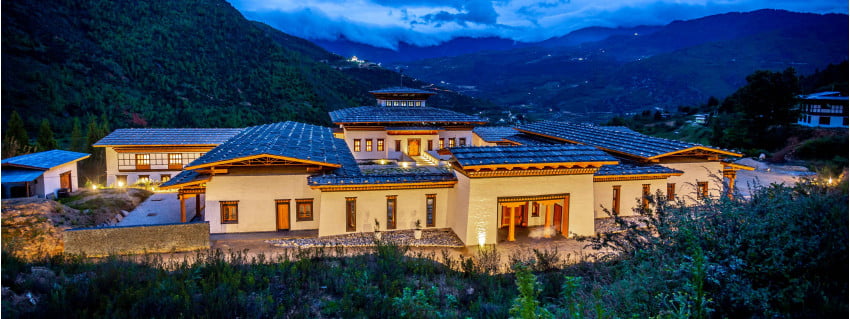
Bhutan Spirit Sanctuary is the first and only 5-star wellness-inclusive luxury resort in Bhutan. Every stay includes all meals, with a delightful 4-course set lunch and a 6-course set dinner, alongside an à la carte breakfast. In addition, exclusive rates offer access to the expertise of Traditional Bhutanese Medicine Doctors, one wellness treatment per paid night, and complimentary use of wellness services and facilities. Yoga classes, meditation sessions, and a curated selection of in-house activities further enhance any stay, promising an experience that nourishes the body, mind, and spirit.

Comments