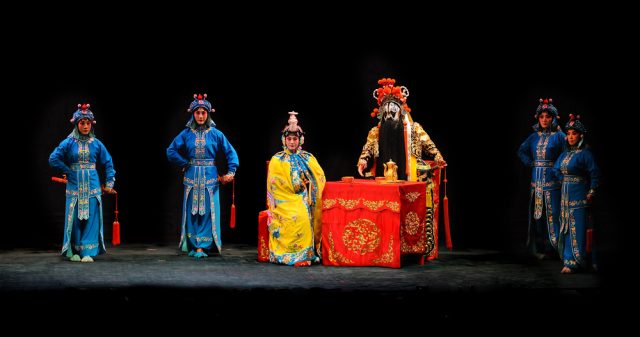
When I first witnessed a performance of Peking opera (the best-known form of Chinese opera, with Peking by the way being the traditional English spelling of Beijing) years ago in Beijing’s ornate, early-19th-century Huguang Guild Hall, I admit I was mesmerized by the gestalt of this elaborate art form. Unlike Western opera, it’s even more stylized, with exaggerated gestures, vocalisations, and heavily symbolic costume and makeup (and in some cases obviously extremely fakey beards!).
This most popular and widespread form of Chinese opera – which blends music, verse, mime, dance, and acrobatics but is fairly minimalist in terms of scenery and props – arose in the late 18th century and became fully developed by the mid-19th century. The characters are based on four basic personages, and the plots on Chinese folklore and history (though also increasingly on contemporary history, as well).

Replies